

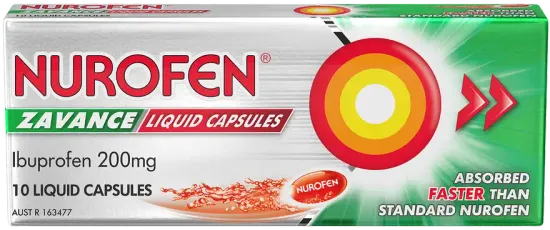
Nurofen Zavance Fast Pain Relief Liquid Capsules 200mg
Nurofen Zavance Liquid Capsules (200mg ibuprofen) are quickly absorbed into the bloodstream to reach the source of pain fast, so you can get on with life.
Fast Pain Relief


Stress is a natural response to the body experiencing a threat or excessive demand. The reasons people get stressed vary with issues arising from relationships, work, health, family and financial pressures. It could be moving house, losing a loved one, starting a new job, or worrying about a deadline… they all can have an effect on us in different ways.
Interestingly enough, stress in itself isn't necessarily harmful. A little bit can actually help motivate you to achieve goals and ambitions. It’s when you’re under too much stress that your health can suffer. Thankfully, there are a number of simple steps you can take to help manage stress and stressful situations. The first step is to recognise the signs of stress.
When we are stressed our bodies respond with physical changes- your heart beats faster, your breathing getting faster, your muscles tense up and you start to sweat. Sound familiar? These changes usually go away as soon as the stress is removed, but if the stress sticks around (e.g. an ongoing financial problem) you may develop stress-related symptoms that can later lead to certain health conditions.
Here are the signs of too much stress:
If you are experiencing any of these signs on a regular basis, speak to your doctor for further advice.
Stress is a part of life and learning to manage it is a life skill. It is an important part of keeping yourself in good physical and mental health. The key to managing stress is to wind down before you get wound up. Here are some anti-stress tips that can help you get started today!
If you are finding it difficult to manage your stress, remember you are not alone. Reach out to your doctor or find a therapist or counsellor.
In situations of distress, support from a trained counsellor is available free by phoning:
Mental Health Foundation NZ call or text 1737
Depression Helpline 0800 111 757
Lifeline 0800 543 354
Healthline 0800 611 116
Samaritans 0800 726 666
Youthline 0800 376 633
If it is a medical emergency, be sure to phone 111 or go to your nearest hospital emergency department.
First published: 15th July 2021
Last updated: 16th May 2024
This article is for general information only and not intended as a substitute for medical advice. All information presented on these web pages is not meant to diagnose or prescribe. In all health-related matters, always consult your healthcare professional.
Always read the label. Use only as directed. Incorrect use could be harmful. If symptoms persist, see your healthcare professional. Do not use if you have a stomach ulcer. Do not give to babies under 3 months of age. Seek medical advice for children under 12 months of age. RB-M-38396. Reckitt Benckiser, Auckland